◎ indicates a movable holiday whose observance date varies each year.
Provincial Anniversary Days
In addition to national public holidays, each region observes its own annual regional Anniversary Day. * Major representative cities in each region are shown in parentheses.
Other provinces and regions across the country also observe their respective anniversary days.
G-sect
Y-sect
Overview of New Zealand Public Holidays
Waitangi Day (National Day) Commemorates February 6, 1840, when the Treaty of Waitangi was signed between the British Crown and Māori chiefs, establishing British sovereignty over New Zealand.
Good Friday, Easter Monday Commemorates the crucifixion and resurrection of Jesus Christ. Good Friday marks the crucifixion and death of Jesus, while Easter celebrates His resurrection. Easter Monday, the day following Easter Sunday, is also observed as a public holiday.
Anzac Day Originally established to honor the Australian and New Zealand Army Corps (ANZAC) during World War I, it now serves as a national day of remembrance for all service members killed in military conflicts.
King’s Birthday (1st Monday in June) Celebrates the official birthday of the British Monarch. While King Charles III's actual birthday falls on November 14, official celebrations are held in June when weather conditions are typically more favorable.
Matariki Marks the Māori New Year based on the lunar calendar, with the observance date changing annually.
New Zealand's Flag & National Anthem
National Flag
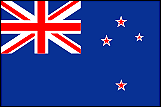
Adopted in 1902, the national flag of New Zealand is a Blue Ensign featuring the Union Jack in the upper-left hoist, complemented by four red five-pointed stars outlined in white representing the Southern Cross constellation.
National Anthem
The national anthem of New Zealand is "God Defend New Zealand". The lyrics convey a solemn prayer asking God to protect the nation and its people from war, strife, and conflict.